Home / Services / Manufacturing agreements

China legal services · Manufacturing agreements

China Manufacturing Agreement Lawyer

A manufacturing agreement is the contract that turns your order into obligations a Chinese factory can be held to: what it makes, to which standard, how you check the goods, when risk and payment pass, who owns the tooling, and where a dispute is decided. I draft and review these agreements for overseas buyers, in English and Chinese, with the Chinese text written to be read by a Chinese court.

USD 3,950to draft a bilingual agreement, one supplier
USD 1,250to review an existing agreement
5–7 daystypical drafting time

Scope and fee are confirmed in writing before paid work begins.

Discuss your manufacturing agreement →Fees & process

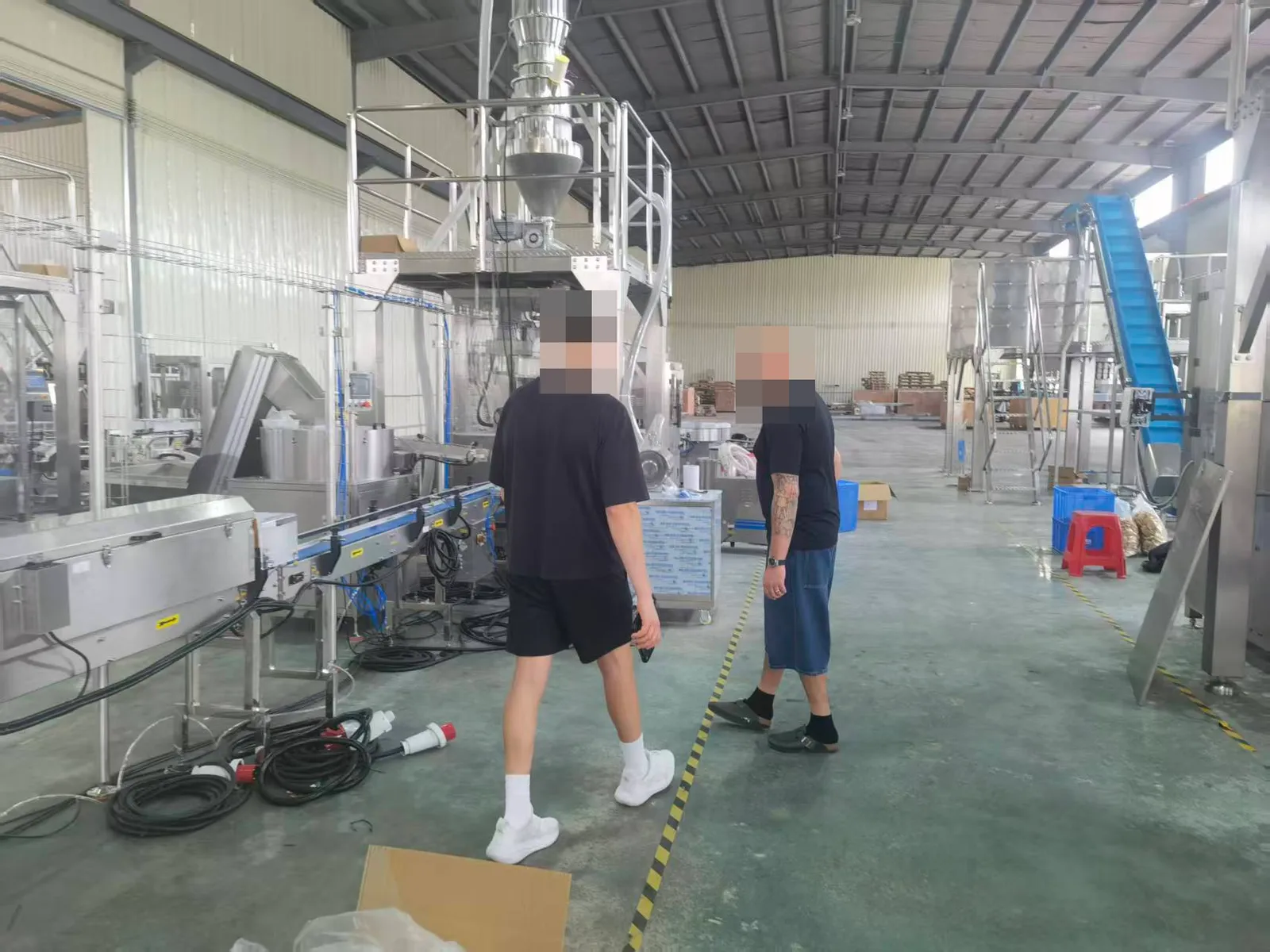
Packaging machinery on a production floor, people anonymised
From a factory visit: packaging machinery on the production floor. People anonymised.

The short answer

  • A purchase order rarely covers what decides a quality dispute: the standard, the inspection and when risk passes.
  • The Chinese text should be written to be read by a Chinese court, and both language versions should do the same job.
  • Factories push back on seven clauses: overproduction, tooling ownership, tooling return, the forum, the quality standard, inspection and risk.
  • When goods fail, Chinese courts ask whether the goods tested are the goods delivered, and whether the inspection is the one the contract required.
  • Drafting starts at USD 3,950; review of an existing agreement at USD 1,250.

Open the part that matches your question. Each section is complete on its own.

What do Chinese courts ask when goods fail?

Four questions courts ask when goods fail.

I've acted in Chinese courts for buyers claiming against factories, and for factories defending those claims. Seeing the factory's side of the file is useful, because the buyer's case usually fails for reasons that were settled when the contract was signed, long before anything went wrong.

The four I see most often:

Are these the goods the factory delivered?

The buyer can't prove the goods in question are the goods the factory delivered. Batches get mixed in a warehouse, goods are repacked for export, other suppliers' parts end up in the same system. If nothing in the contract ties a lot number, a sealed sample or a serial number to the delivery, the factory only has to say "those might not be ours."

Was it the inspection the contract calls for?

The inspection that found the problem isn't the one the contract calls for. An overseas customer's lab tests the goods against its own country's standard, or against a standard the contract never mentions. A Chinese court asks whether the goods meet the contract, so a report measuring something else carries little weight.

What did the buyer do after finding the problem?

The buyer kept going. It went on accepting deliveries, promising payment or using the equipment after it knew about the problem, and only raised quality when the factory chased the balance. Courts read that conduct as evidence.

Was the overseas loss actually paid?

The loss abroad was never proved. A customer's claim email or a deduction from an invoice shows that someone complained. It doesn't show that money was actually paid, or that the amount was reasonable.

Each of these has a drafting answer, and most of this page is about them.

Which clauses do Chinese factories push back on?

Overproduction, tooling, forum, quality, inspection and risk.

These are the provisions Chinese suppliers most often resist in my negotiations. For each, here's what the factory usually wants and what I write instead.

1. Overproduction

What the factory wants: freedom to use surplus stock, rejects and packaging as it sees fit.

What I write: production only against written orders with quantities; any surplus reported, then delivered to you or destroyed on your instruction with photos; branded packaging, labels and printing plates returned or destroyed when the relationship ends; a fixed sum for each unauthorised run plus an amount per unit found.

→ What three Chinese courts awarded when factories kept producing

2. Tooling ownership

What the factory wants: tooling described as "developed by the factory," or cost built into the unit price with no ownership term.

What I write: tooling you pay for belongs to you from payment, whether paid separately or amortised, with a tooling schedule (photos, tool numbers, cavity counts) signed by both sides, and ownership stated separately from the product design. Who owns the drawings and who owns the steel are different questions.

→ The design was the factory's, the moulds were the brand's

3. Tooling return

What the factory wants: to keep the tooling until every account is settled.

What I write: return within a fixed number of days of your written request, ready for shipment, whatever else is in dispute; no right to hold the tooling for money owed, stated expressly; and a daily sum if it's late. Whether a factory can lawfully hold tooling depends on who owns it and what the debt is for, and a written exclusion takes most of that argument away (Civil Code arts. 447–449, 783).

→ If the factory is already holding your tooling

How will a Chinese court read your agreement?

Sale or processing, vague standards, inspection periods.

Sale or processing contract?

Chinese law has separate rules for a sale of goods and for a processing contract, where the factory makes something to your requirements and delivers the result (Civil Code art. 770). OEM work often sits close to the line, and the title on the document doesn't settle it. A court looks at what the factory actually undertook to do.

The classification changes things you care about:

  • Tooling and unpaid fees. Under a processing contract, a factory that hasn't been paid can hold the work it has completed, unless the parties agreed otherwise (art. 783). That's one reason I write an express exclusion of any right to hold your goods, tooling or materials.
  • Subcontracting. A processing contractor must do the main work itself unless you agree otherwise, and if it passes the main work to someone else without your consent, you may terminate (arts. 772–773).
  • Walking away. Under a processing contract, the customer can terminate at any time before the work is finished, paying the factory's resulting loss (art. 787). That can be valuable if a development goes badly, and it's worth deciding in the contract how that loss is calculated.

I don't try to force a label onto the deal. I write the clauses that matter so they work whichever way a court classifies it.

If the quality standard is vague

Where the contract doesn't make the quality requirement clear, and it can't be filled in from the rest of the contract or trade practice, Chinese law applies a fallback: mandatory national standards, then recommended national standards, then industry standards, then the usual standard or one that fits the purpose of the contract (Civil Code arts. 510–511). That fallback is rarely what an overseas buyer has in mind. If your market has its own requirements, or you're relying on an approved sample, the contract has to say so, and say which prevails when they conflict.

Inspection periods

If the contract sets an inspection period, you must notify the factory of quantity or quality problems within it, or the goods are treated as conforming (art. 621). If it sets none, you must notify within a reasonable time after you found the problem or should have, and in any case within two years of receiving the goods, unless a quality guarantee period applies instead.

Two rules help buyers. A period that's too short to inspect the goods properly, given what they are, counts only as the period for visible defects (art. 622). And if the factory knew or should have known the goods didn't conform, the notice deadlines don't bind you (art. 621). Neither rule is something to rely on. A contract that sets separate periods for visible defects and for defects that only show in use or testing avoids the argument.
What else might I need alongside the agreement?

NNN, quality agreement, supplier checks and tooling.
An NNN first.If you're sharing drawings or customer information before the production terms are agreed.→ China NNN agreements
A product development agreement.If the factory is developing or adapting the product, not just making an agreed design. Milestones, prototypes and who owns the improvements belong there.→ Product development agreements
A quality agreement.If the product needs detailed inspection levels, change control and defect handling that would overload the main contract. It sits alongside the manufacturing agreement as a schedule you can use order by order.→ Services: quality agreement
A supplier check.If you haven't confirmed which company you're contracting with, and whether the factory, the company issuing invoices and the payee are the same.→ Supplier legal due diligence

What can't a manufacturing agreement do?

The limits, stated plainly.
    • It won't make up for evidence you don't keep: batch records, inspection photos, the approved sample under seal.
    • It won't bind a subcontractor that never signed it, unless the subcontractor gives its own undertaking.
    • It won't protect a brand that isn't registered in China.
    • It won't turn a factory that's already in breach into a cooperative one. If you're past that point, start with the evidence, not a new draft.

What does a manufacturing agreement cost?

Drafting, review, quality agreements and negotiation.

New bilingual manufacturing / OEM agreement

— from USD 3,950

One Chinese supplier, one product family, one bilingual agreement with the Chinese text controlling, one consolidated revision round and a 30-minute handover call.

Review of an existing agreement

— from USD 1,250

A written risk review of the factory's draft or your current contract, with the changes I'd ask for. Replacement drafting is separate.

Quality agreement

— from USD 1,750

Inspection, acceptance, change control and defect handling, as a bilingual schedule to the main agreement.

Negotiation support

— quoted by round

Counterparty redlines, calls and further drafting rounds.

What moves the fee

Several product families, or a range with different specifications
Equipment with installation, commissioning and acceptance testing
More than one Chinese party: a trading company in front of the factory, or an affiliate
Tooling schedules across several tools or sites
Development work or IP in the product
Urgency

Fees and deliverables are confirmed in writing before paid work begins. If you're not sure which scope fits, send a short summary and I'll suggest the smallest one that does the job.

What do I receive?

From the first brief to signing guidance.
  1. 1. A short brief and conflict check.

    You describe the product, the supplier and the timetable without sending confidential files in the first message.

  2. 2. A transaction summary: the parties, the product, the money flow and the open points you need to decide.

  3. 3. The bilingual agreement, with schedules for specifications, tooling and inspection where needed.

  4. 4. An explanation of the key clauses and the risks you're accepting.

  5. 5. One consolidated revision round.

  6. 6. Signing guidance: which company signs, which seal, which schedules form part of the final set, and what records to keep.

Selected matters

These examples are based on matters I have handled. Names, products, places, dates, amounts and other identifying details have been removed or changed. They show the kind of work involved, not a promised result.

Acting for a buyer

Acceptance terms decided the case.

A buyer of a specialist industrial material claimed that two deliveries, including a replacement batch, failed in production. The parties had agreed in their negotiations that retained samples, batch records and independent laboratory testing would settle any disagreement. That agreement, together with the supplier's own conduct in remaking and recalling the goods, allowed the court to connect the tested material to the delivery.

Acting for a buyer

The short inspection clause.

A buyer of custom-made parts for export discovered faults only after its overseas customer began assembly. The delivery note's short inspection period barred claims for defects that could have been seen on arrival. It didn't bar a hidden finishing defect that only appeared later. Part of the export return and repair costs was recovered; the rest failed for lack of evidence that it had actually been spent.

Acting for a supplier

A foreign test against the wrong standard.

An exporter claimed that industrial components were defective, relying on inspection reports from its overseas customer. The contract specified a Chinese technical standard; the reports applied a different one. Prompt complaint was not proof of non-conformity, and the claim failed.

Advising a buyer

The design wasn't theirs. The tooling was.

An overseas brand had funded the tooling for a product the factory had originally designed, and had been promised exclusive rights for North America. The factory later sold a slightly modified version to others. The work separated three questions: ownership of the design, ownership of the tooling the client paid for, and the exclusivity promise. It then set out a low-conflict route that confirmed the tooling's location and status in writing while keeping supply running.

Questions from overseas buyers

Is a purchase order enough?

Usually not for a first production run. A purchase order fixes the product, price and quantity, but it rarely deals with inspection, tooling, what happens to surplus, or where disputes go, and those are the points that decide most disputes.

Can you review the contract the factory sent me?

Yes. Send an outline first with your signing deadline. The review identifies what to change and what to ask the factory for, and replacement drafting is a separate step if you need it.

Should the agreement be in Chinese, English or both?

Both, with the Chinese version controlling, in most cases. It's the version a Chinese court or arbitration body will read, and the factory's signatory can read it before sealing it.

Who should own the tooling if the cost is built into the unit price?

You can own it either way, but the contract has to say so and say from when. Where tooling is amortised, I tie ownership to a schedule and to payments, so there's no argument later about whether it's been "paid off."

The factory says its factory inspection is final. Should I accept that?

Accept that it's final for what can be checked at the factory. Keep a separate right to inspect on arrival, with its own period for defects that only show in use.

Do I need a separate quality agreement?

If your product has detailed specifications, inspection levels or frequent changes, yes. Keeping them in a schedule lets you update them without renegotiating the whole contract.

Further reading

Start with a short message to Adrian.

English or Chinese. A short, non-confidential summary is enough to start.

Start with a short summary and the parties’ names for a conflict check. Please wait for us to confirm how to share documents before sending sensitive files. Sending an enquiry does not mean we have accepted the instruction.

Local preview: this form does not send information. Contact details

Deadline or contact preferences (optional)

Please do not include confidential documents, detailed personal records or sensitive business information. Sending an enquiry does not establish representation or authorize action. Do not rely on this form to meet a deadline. Privacy notice

Adrian receives your enquiry and coordinates with the responsible lawyer. English or Chinese.